


Introduction: The Spirit of a Champion Nation
Cricket in Asia is more than just a sport — it’s a collective passion that binds billions. And when it comes to the Asia Cup, no team has carried that spirit with greater consistency and class than India. Since the tournament’s inception in 1984, India’s journey through the Asia Cup has mirrored the evolution of Asian cricket itself — marked by fierce rivalries, emotional triumphs, and moments of national pride.
As of 2025, India stands tall as the most successful team in Asia Cup history, with nine titles — a record that underscores decades of dominance, adaptability, and leadership.
India in The Early Years: Laying the Foundation (1984–1990)
The Asia Cup began in 1984 in the United Arab Emirates, aiming to promote goodwill among cricket-playing nations of Asia. India, led by Sunil Gavaskar, made an early statement by lifting the inaugural trophy. Despite limited resources and few matches, that victory set the tone for India’s cricketing supremacy in the region.
The late 1980s saw mixed fortunes. Sri Lanka and Pakistan began emerging as serious contenders, but India’s balanced sides — featuring icons like Kapil Dev, Dilip Vengsarkar, and Mohinder Amarnath — ensured they stayed among the top teams.
The 1990s India: The Rivalries Take Shape
The 1990s transformed the Asia Cup into a battleground of emotions. India vs. Pakistan matches became global events, and the growing might of Sri Lanka added another layer of competition.
In 1995, India, led by Mohammad Azharuddin, reclaimed the Asia Cup with style, defeating Sri Lanka in the final. Sachin Tendulkar’s all-round brilliance and Anil Kumble’s precision defined the era. The 1997 and 2000 editions brought heartbreaks, but India continued to nurture a golden generation of players — setting the stage for domination in the new millennium.
The Dhoni’s India: Calm, Control, and Championships (2008–2018)
The modern era of Indian dominance in the Asia Cup began under Mahendra Singh Dhoni. His captaincy transformed India’s approach — blending aggression with composure, and experience with youthful flair.
2008: The Start of a New Chapter for India
India’s 2008 campaign in Pakistan marked a new dawn, with Virender Sehwag and MS Dhoni steering the team into the final. Although Sri Lanka clinched the trophy that year, India’s young core — Rohit Sharma, Gautam Gambhir, and Suresh Raina — hinted at an exciting future.
2010–2018: Years of Glory
India’s Asia Cup victories in 2010, 2016, and 2018 symbolized cricketing authority.
- In 2010, Dhoni’s leadership combined with Gautam Gambhir’s batting brilliance guided India to triumph.
- The 2016 T20 edition saw India dominate all opponents, with Virat Kohli’s batting heroics leading them to another crown.
- In 2018, India, without Kohli, still went unbeaten under Rohit Sharma, defeating Bangladesh in a thrilling final off the last ball.
This phase wasn’t just about winning titles — it was about establishing a culture of excellence, where India’s bench strength became its biggest asset.
The 2023 Triumph: A Statement of Supremacy
After the COVID disruptions, the 2023 Asia Cup returned in ODI format, co-hosted by Pakistan and Sri Lanka. India’s campaign was clinical from start to finish. In the final, Mohammed Siraj’s fiery spell of 6/21 destroyed Sri Lanka for just 50 runs, and India chased it down effortlessly to win by 10 wickets. It was a ruthless display — a reminder that India’s ODI dominance was alive and thriving.
This win also reignited belief among fans that the next generation — including Shubman Gill, Ishan Kishan, and Hardik Pandya — could continue the legacy established by legends before them.
2025 Asia Cup: Drama, Dominance, and a Historic Rivalry
The 2025 edition of the Asia Cup, held in the UAE, was perhaps the most emotionally charged and politically complex tournament in the event’s history. Originally scheduled to be hosted by India, it was moved to a neutral venue due to geopolitical tensions with Pakistan.
But despite off-field turbulence, India’s performance on the field was spectacular.
Group Stage: Steady Beginnings
India began with a comprehensive win over UAE, followed by a dominant performance against Oman. The highly anticipated India–Pakistan group clash drew millions of viewers, and India triumphed with calm authority, signaling their intent early in the tournament.
Super Four: Resilience Under Pressure
In the Super Four stage, India faced strong resistance from Sri Lanka and Bangladesh but held firm. Their thrilling Super Over win against Sri Lanka, followed by a convincing victory over Pakistan, booked them a place in the final.
The Final: India vs. Pakistan – Rivalry Rewritten
The Asia Cup 2025 Final at Dubai International Stadium on September 28, 2025, was historic. For the first time ever, the tournament’s final featured India and Pakistan — a clash that transcended cricket.
A Battle for the Ages
Batting first, Pakistan were bundled out for 146 runs in 19.1 overs, thanks to Kuldeep Yadav’s magical spell of 4 wickets. His variations, flight, and control left Pakistan’s middle order clueless.
India’s chase, however, was far from smooth. Early wickets brought tension in the stands, but Tilak Varma anchored the innings with an unbeaten 69 off 53 balls, steering India home with just two balls to spare. His composure under pressure earned him the Player of the Match award and immense praise from fans and experts alike.
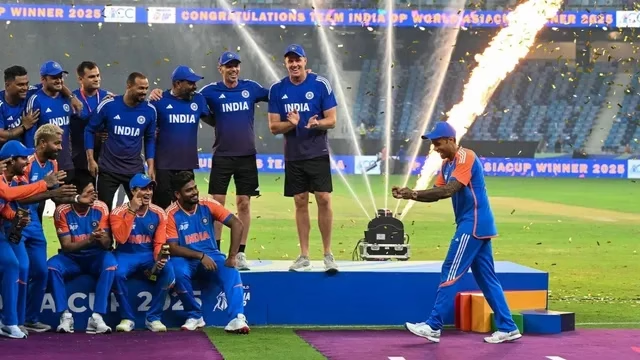
The Trophy Controversy: When Politics Overshadowed Celebration
After the final whistle, an unexpected twist shook the cricketing world. During the post-match presentation, India refused to accept the trophy from Mohsin Naqvi, the President of the Asian Cricket Council (ACC) and Pakistan’s Interior Minister. The Indian team expressed concerns about the political implications of accepting the trophy from a Pakistani government representative.
The trophy presentation was delayed, and eventually, India left the podium without receiving the cup. Captain Suryakumar Yadav later told reporters that while the team was proud of its win, it was “denied the rightful celebration moment.”
The incident ignited global debate. Many saw it as a reflection of ongoing political tensions spilling into sports, while others hailed India’s stand as symbolic of national pride.
Nevertheless, history was clear: India were the rightful champions of Asia, on and off the field.
Heroes of the Tournament
| Player | Role | Performance |
|---|---|---|
| Abhishek Sharma | Top Run-Getter | 314 runs in the tournament, providing aggressive starts |
| Kuldeep Yadav | Leading Wicket-Taker | 17 wickets, including 4 in the final |
| Tilak Varma | Match Winner | 69* in the final to secure the chase |
| Suryakumar Yadav | Captain & Motivator | Steady leadership and vital middle-order runs |
Together, they represented a new era of Indian cricket — confident, composed, and fearless under pressure.
India’s Asia Cup Legacy: Records That Speak Volumes
- 9 Titles — the most by any team
- First Champions (1984) and Most Recent Champions (2025)
- Only team to win in both ODI and T20 formats multiple times
- Produced four different title-winning captains — from Gavaskar to Dhoni, Rohit, and Suryakumar
This dominance is not just statistical; it reflects India’s unmatched cricketing infrastructure, talent depth, and mental strength on the big stage.
Beyond the Trophy: What the Asia Cup Means to India
For India, the Asia Cup is more than just another tournament — it’s a stage for asserting regional leadership and uniting a nation behind its cricketing heroes. Every edition has produced memories that transcend sport — from Tendulkar’s centuries to Dhoni’s tactical genius, from Kohli’s masterclasses to Varma’s calm heroics.
The 2025 victory, with all its political drama and emotional undertones, reaffirmed one truth: India doesn’t just play cricket — it defines it in Asia.
Conclusion: The Road Ahead
As the dust settles on another triumphant Asia Cup campaign, India’s focus shifts to global tournaments ahead. But the story of the Asia Cup remains etched in history — a journey of resilience, rivalry, and relentless excellence.
From 1984 to 2025, the Men in Blue have not only dominated the game but have also carried the hopes of a billion hearts with grace and grit. The Asia Cup may change formats, hosts, and rivalries, but one thing remains constant — India’s unyielding quest for greatness in cricket’s most emotional arena.
Also Read: Kohli and Rohit Set to Return for ODIs in Australia