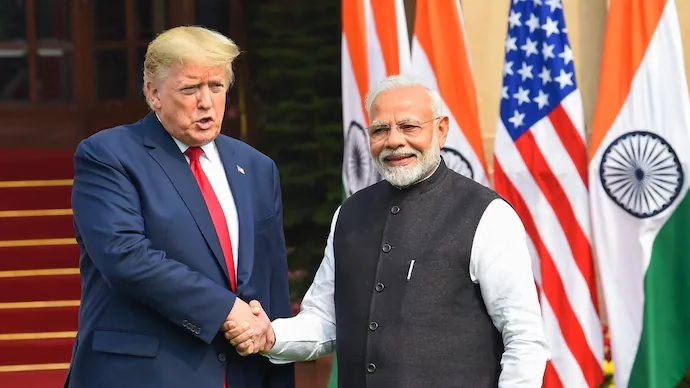
India on Thursday firmly rejected U.S. President Donald Trump’s assertion that Prime Minister Narendra Modi had agreed to stop importing oil from Russia, calling the claim baseless and emphasizing that no such conversation took place between the two leaders.
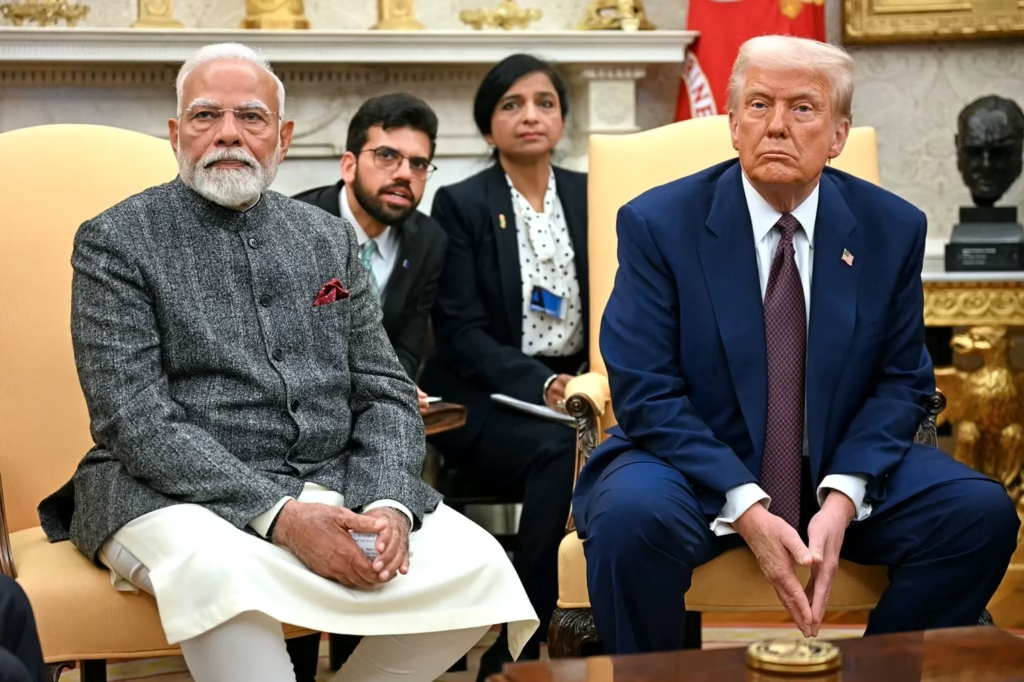
India Counters Trump’s Statement
A day after President Trump told reporters in Washington that “Prime Minister Modi assured me that India will not be buying oil from Russia,” India’s Ministry of External Affairs (MEA) issued a clear rebuttal.
MEA spokesperson Randhir Jaiswal said, “I am not aware of any conversation between Prime Minister Modi and President Trump on this matter,” effectively denying any diplomatic understanding regarding Russian oil imports.
In a separate written statement, the ministry reiterated that India remains a “significant importer of oil and gas” and that its energy policies are shaped by “national interest and the needs of Indian consumers,” without naming Russia.
The clarification highlights India’s ongoing stance of strategic autonomy — balancing its energy security while navigating the geopolitical tensions between Washington and Moscow.

The Background: U.S. Pressure and India’s Energy Reality
Trump’s comment came amid growing American pressure on countries continuing to import Russian oil, as Washington seeks to tighten sanctions on Moscow over the prolonged war in Ukraine.
However, India has consistently defended its right to purchase energy wherever it finds affordable and reliable sources, arguing that global oil prices and domestic economic stability are its primary concerns.
Since 2022, India has emerged as one of Russia’s top oil buyers, taking advantage of steep discounts that help stabilize domestic fuel prices. Officials maintain that this trade does not violate any international law or sanction regime.
Moscow Reacts, Market Watches
Reacting to Trump’s statement, Russian Deputy Prime Minister Alexander Novak expressed confidence that India would continue its cooperation with Moscow, calling the partnership “mutually beneficial and long-term.”
Energy experts say Trump’s claim could add volatility to oil markets and diplomatic relations, though India’s quick clarification may calm concerns about an immediate disruption in supply chains.
Meanwhile, Indian refiners are reportedly evaluating their import portfolios to prepare for potential policy changes or price shifts — but no official reduction in Russian oil imports has been announced.
Analysts: “A Diplomatic Misfire”
Analysts see this episode as yet another test of India’s ability to maintain a careful balance between Western allies and its long-standing ties with Russia.
“Trump’s statement appears politically motivated,” said foreign policy expert Suhasini Haidar. “New Delhi’s denial underscores how sensitive India is about being portrayed as bowing to external pressure.”
The timing also coincides with ongoing trade tensions, as the Trump administration recently increased tariffs on Indian exports, further complicating bilateral ties.
Conclusion
As of now, India has neither confirmed nor committed to ending Russian oil purchases. The MEA’s firm denial of any “assurance” to the U.S. signals that New Delhi intends to make its energy decisions independently, prioritizing affordability and security over political optics.
While Trump’s remarks made global headlines, India’s response makes it clear — when it comes to oil diplomacy, New Delhi will not let anyone else call the shots.